Meme coin trading versus holding: what actually pays off and why
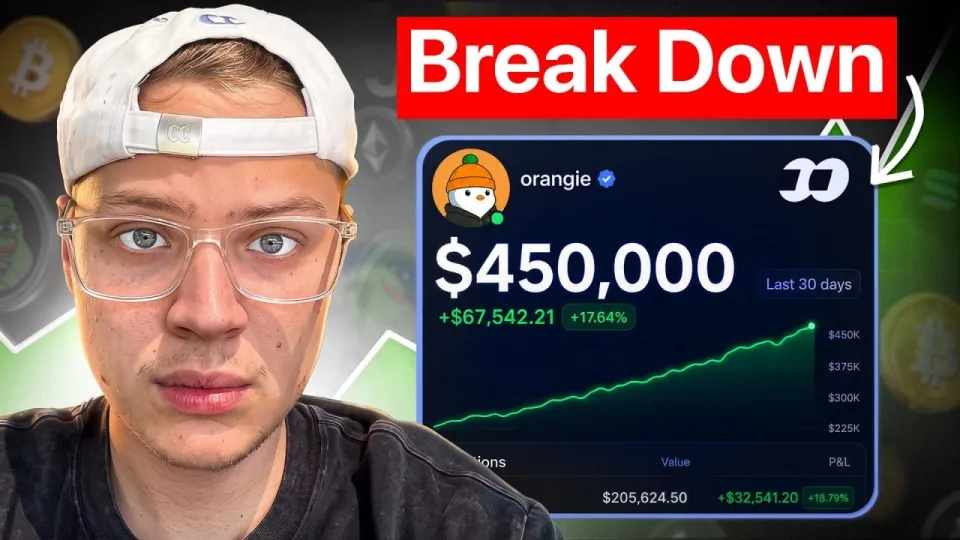
Video: How I Made $450,000 Trading Memecoins in 30 Days
Need articles like this for your video? They help promote it on YouTube and Google — order them in the Telegram bot @sat_sit_bot. Articles with your video embedded are written and posted by the bot itself — on popular topical sites (no ads). Try it free: 50 articles on us.
· based on the channel Orangie Web3
Key takeaways
- Orangie Web3 reports turning roughly $450,000 in 30 days of meme coin trading, built on many small trades rather than one lucky bag.
- Most meme coins on Solana launch through pump.fun-style bonding curves and only reach a DEX after a small market cap threshold.
- A single 100x hit is not a strategy: the same volatility that produces it can wipe 90% of a position in minutes.
- Traders who sit in private groups with shared calls and fast execution see coins before public timelines do.
- Survivorship bias hides the losses: losing trades rarely get uploaded, winning ones always do.
Meme coin trading is a fast, high-risk game where the edge comes from execution speed, position sizing and exiting into hype — not from picking one coin and holding it forever. That is the practical answer to the trade-or-hold question: for almost everyone, treating a meme coin as a short-term trade with a predefined exit beats treating it as an investment. The channel Orangie Web3 makes this case with a loud headline — roughly $450,000 in 30 days — and the mechanics behind such a number are worth unpacking before anyone copies it; the entry point promoted in that video is the Kaizen group membership on Whop.
What a meme coin actually is and why it moves so fast
A meme coin is a token whose value rests on attention, community and narrative rather than cash flow, revenue or a product roadmap. Dogecoin is the grandfather of the category, but the modern version lives on Solana, where launchpads such as pump.fun let anyone mint a token in seconds and trade it along a bonding curve before it ever reaches a decentralized exchange. That structure explains the speed: liquidity arrives instantly, there is no listing committee, and price is set purely by who is buying right now. Because supply is fixed and float is tiny at launch, small inflows produce violent percentage moves — the reason a coin can print 10x in an hour and give it all back before lunch. The same mechanics that create 100x stories also create the tokens that go to zero while you are still reading the chart.
Why trading beats holding for most meme coin participants
Trading wins over holding because meme coins have no fundamental floor to anchor a long-term position. There is no earnings report, no discounted cash flow, no buyback — only the next wave of buyers. When that wave stops, price does not "correct to fair value," it collapses toward zero, and the token usually never recovers. A trader accepts this and rents exposure for hours or days; a holder pretends the asset has intrinsic worth and donates the position back to the market. The practical difference shows up in three places:
- Exit discipline. A trade has a target and a stop written before entry; a hold has a hope.
- Capital recycling. Gains from a closed trade can be redeployed into the next launch instead of sitting in a dead chart.
- Drawdown control. Cutting a losing position at -30% keeps you in the game for the next setup; averaging down on a meme coin usually means funding someone else's exit.
The counterargument is real too: active trading costs time, fees and attention, and most retail traders underperform simply because they overtrade. The honest version of the claim is that meme coins reward fast, rules-based trading and punish buy-and-hope — not that trading is easy.
How six-figure results are actually assembled
Six-figure meme coin results are assembled from many mid-sized wins, not one miracle bag. A $450,000 month on a modest starting balance implies either a very large account or a compounding sequence of 2x–5x trades with strict sizing — and, crucially, a lot of small losses in between. The realistic anatomy looks like this: dozens of entries, a hit rate well under 50%, a handful of runners that pay for everything, and position sizes small enough that no single rug pull ends the month. Anyone quoting a big number should also be asked about the losing weeks, because the same strategy that produced the gain can produce an equally large drawdown. Treat any headline figure as a marketing artifact until you can see the full trade log, including the red rows.
The group advantage nobody puts in the thumbnail
Private trading groups shift the odds because information and execution are shared. In a Discord of experienced traders, calls go out before they hit public timelines, members compare entries, and someone is always watching the chart while you sleep. That is a genuine edge — and also the least discussed part of any "I made X" video, since it is less exciting than a green candle. For a beginner, the takeaway is not to chase an invite but to understand the structure: the people front-running public hype are organized, fast and often using multiple wallets. Competing with that alone, from a phone, on a coin you saw on a social feed, is the single most reliable way to lose money in this market. The FOMO trading app linked from the video (https://fomo.family/r/orangie) is the execution venue the creator uses, and the community hub is the Discord at https://discord.gg/memecoins.
Common doubts from viewers and how to resolve them
The most frequent doubts from viewers are about speed, losses and whether the whole thing is survivorship bias. Many say the explanations move too fast, others describe losing 90% of a small starting stack before catching one 3x on a coin like AMC, and a few point out that the big wins come from people already sitting in insider chats. All three observations are correct at once. Losing most of a small bankroll is normal early tuition; recovering it with one hit is luck plus sizing, not a system. And yes, the traders posting seven-figure screenshots are the survivors — the rest deleted their accounts. The useful response is to slow down deliberately: journal every entry with the reason, the size and the exit plan, review the log weekly, and only increase size after a full month of positive expectancy. Feedback about pacing is worth taking seriously too — if a concept needs rewinding three times, it is not yet understood well enough to risk money on.
Risk rules that keep a meme coin account alive
Survival in meme coin trading depends on rules written before the trade, not conviction during it. Four that matter most: never risk more than a small fixed percentage of the bankroll per position, because rugs and honeypots are a when-not-if; check contract basics such as mint authority and holder concentration before buying, since a single wallet holding 40% of supply can exit on you; take partial profits on the way up instead of waiting for a round number; and accept that a 90% loss requires a 900% gain to break even, which is why cutting early is arithmetic, not cowardice. Add slippage and priority fees on Solana to the cost side — they quietly eat returns on small trades. None of this makes meme coins safe; it makes them survivable long enough to learn.
Useful links
- Kaizen group membership on Whop — the paid community promoted in the video
- https://fomo.family/r/orangie — the FOMO trading platform used for entries and exits
- https://discord.gg/memecoins — the free Discord where calls and discussion happen
- https://www.instagram.com/orangieyt/ — the creator's Instagram
Final takeaway
Meme coin trading rewards speed, sizing and exits, while holding rewards almost nobody, because these tokens have no floor beneath the hype. The $450,000 headline from Orangie Web3 is best read as a demonstration of compounding small edges inside an organized group, not as a promise available to a lone beginner with a phone. Learn the mechanics, journal the trades, risk only what you can lose entirely, and treat every screenshot — including the impressive ones — with suspicion. If the structured route appeals to you, the Kaizen group on Whop is where that conversation continues.
Source: How I Made $450,000 Trading Memecoins in 30 Days · Markdown version
Questions & answers
Is meme coin trading better than just buying and holding a token?
For most participants, yes, because meme coins have no cash flow or valuation floor, so a long hold has nothing to support it once attention fades. Trading with a predefined target and stop lets you rent exposure and cut losses. Holding only makes sense for the handful of large, liquid tokens you would treat as a long-shot lottery ticket with money you can lose entirely.
How realistic is making $450,000 in 30 days from meme coins?
It is possible but extremely rare and usually requires a large starting balance, dozens of trades, a low hit rate offset by a few big runners, and access to fast information. The figure comes from a promotional video, and losing weeks are rarely shown. Treat it as an illustration of compounding and sizing, not an expected outcome.
Why do some traders seem to buy coins before everyone else?
Because they operate in private groups where calls are shared early, they use fast execution tools and multiple wallets, and they watch charts continuously. That organizational advantage is the least advertised part of big results. Competing alone against coordinated traders on a coin you saw on social media is the fastest way to lose money.
I lost most of my small bankroll on my first meme coins — should I stop?
Losing most of a small starting stack early is common and is tuition rather than proof the market is impossible. The productive response is to shrink size, journal every trade with the reason and exit plan, and only scale up after a month of positive expectancy. If you cannot explain why a trade should work in one sentence, skip it.